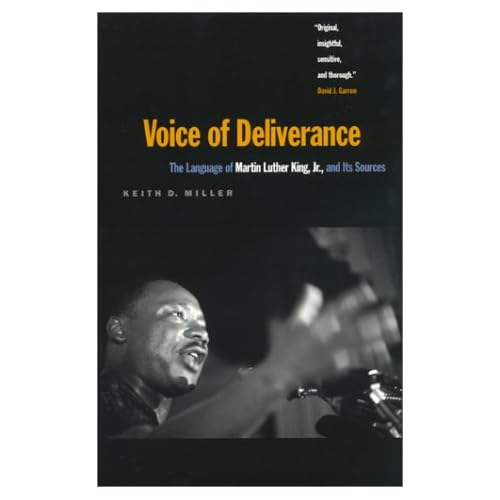
Here's an interesting book that I read yesterday about the influences upon some of the greatest sermons and speeches given during this century by one of Americas best orators, Martin Luther King Jr.

The following morning we awoke for a breakfast of Beignets and coffee. During the drive to a local breakfast diner, I was awestruck by the array of mansions that lined picturesque
Behind this portrait of wealth and Southern charm, hidden away in the backstreets, were blighted ghettos, houses with caving roofs and broken windows—two different worlds separated by a walk of but a couple of minutes! Here there were no iPod attired joggers, but rather a black man who politely said hello and then went on carefully picking through a trash can, collecting cans and other bits of metal that he could sell by the pound to the local scrap metal dealer. These much smaller houses, had in the past housed the slaves that built and cared for the mansions on
A man by the name of Charles Jenkins, the bishop of
A true revolution of values will soon cause us to question the fairness and justice of many of our past and present policies...we must come to see that the whole Jericho road must be transformed so that men and women will not be constantly beaten and robbed as they make their journey on life's highway. True compassion is more that flinging a coin to a beggar. A true revolution of values will soon look uneasily on the glaring contrast of poverty and wealth. With righteous indignation. [1]
During the first day we worked on renovating a house which belonged to Mrs. Wilson. Her insurance company had given her but $2,000 for the damage, and so the church had stepped in to help. We and the other volunteers busily caulked cracks, framed windows and painted. Mrs. Wilson had been out of her house for over two years now, living along with her children at her sister’s two bedroom home, a place much too small for so many people. It is our hope that her house will be fully renovated and ready for her to move back in within about four months. The next day we helped to finish the landscaping around multiple houses that had been built in some of these bereft neighborhoods and then offered for sale at the lowest possible costs in hopes of revitalizing the community through increased home ownership.
During the evenings, Edward who lead the trip and is a native of New Orleans, had established invitations for us to the homes of his rector and his parents—an opportunity for us to experience true Southern culture which consisted of fine wine, fish tacos and boiled crawfish. Delicious.
The day before we left, we had the opportunity to meet Shakoor Aljuwani, a recent convert to Christianity from the Nation of Islam, and an amazing community leader who is functioning as a voice for the poor and oppressed people of
We drove slowly through a neighborhood of brick buildings that had not been damaged by flooding, but had been secured by the government with great steal casings over the windows at the price of $110 each so that the owners could not return for their belongings. The government had been eager to demolish these functioning buildings and to replace them with more attractive houses. The evacuation of the city via Katrina functioned as a means to quickly remove people from these homes—though it pains me to know that for the past two years many have been without housing and their belongings, because of this decision. They are not allowed back into the buildings. A growing tent city of homeless folks sat as evidence of the treatment of people who did not have the ability to fight—people pushed under this overpass by government officials in an attempt to conceal the hideous sore of a people shorn of their homes and their dignity, dejected by the prosperous city owners. It was a bleak inconsolable passage through the hidden corners of the city. I felt myself becoming angry as I listened to stories of city counsel meetings and pleas for the poor of the city that were heard with disdain and then disregarded.
The church in
After the tour we had lunch with the bishop. He asked us what we had seen and what we would say to the people back home. It was clear to us that the racism and greed that was molesting the poor mostly black people of New Orleans was breaking his heart and had convinced him to take action in any way that he could. “When you go back home, tell my story,” he said to us, “Tell my story.”
The trip was an eye opening experience for me.
[1] Rev. Martin Luther King, “Beyond Vietnam: A Time to Break Silence,” 4 April 1967 (Hartford Web Publishing, 1999), http://www.hartford-hwp.com/archives/45a/058.html (accessed on January 12, 2008).


